Pressmeddelande —
New white paper highlights business opportunities as EU Digital Product Passport requirements approach
Upcoming EU requirements for Digital Product Passports will change how the metals industry manages and shares product information. A new white paper from Swerim highlights how Swedish industry can turn these regulatory requirements into opportunities for greater efficiency, sustainability and competitiveness. It was co-authored with ChainTraced and developed within Digital Metal Values, an innovation project coordinated by Swerim that involves 26 industry partners from the Swedish metals value chain.
Digital Product Passports (DPPs) are being introduced under the EU's Ecodesign for Sustainable Products Regulation (ESPR), with iron, steel and aluminium among the priority product groups. The new requirements aim to improve transparency and traceability by making information about products, materials and environmental performance more accessible throughout the value chain. However, implementing DPPs also presents challenges. Companies need to ensure that product information is accurate, structured and available across different systems and organisations.
Significant opportunities beyond compliance
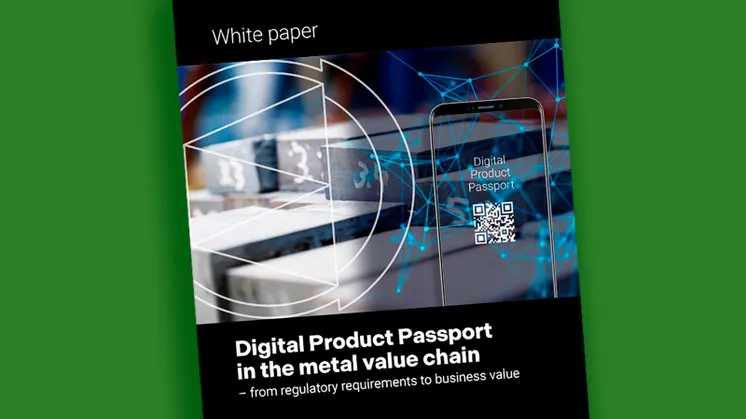
The new white paper, Digital Product Passport in the metal value chain – from regulatory requirements to business value, examines the implications for the metals industry and identifies opportunities to create value beyond regulatory compliance.
"Digital Product Passports should not be seen simply as another regulatory requirement. They offer an opportunity to improve how information is shared across the metals value chain, reduce administrative work and strengthen the competitiveness of Swedish industry.", says co-author Tania Irebo Schwartz, Business Area Manager at Swerim.
By replacing fragmented, document-based information exchange with structured digital data, companies can improve efficiency, reduce administrative costs and strengthen collaboration with customers and suppliers.
“The real value of Digital Product Passports comes when information can flow seamlessly between companies. Through collaboration across the metals value chain, we can develop practical solutions that benefit the entire industry.”, says co-author Victor Andersson, CEO at ChainTraced.
Greater transparency can also help manufacturers demonstrate the environmental performance of their products, supporting more informed purchasing decisions and stronger market competitiveness.
Swedish industry working together
The white paper has been developed within Digital Metal Values, a collaborative project bringing together 26 partners from across the Swedish metals value chain, including material producers, manufacturers, technology providers and research organisations.
The project aims to develop and test practical solutions for efficient and commercially valuable implementation of Digital Product Passports. The publication includes industry perspectives from SSAB, Sandvik Coromant, Seco Tools and Byarums Bruk, highlighting both the challenges and opportunities associated with the transition.
Early preparation is essential
Although the final product-specific requirements are still being developed, the white paper emphasises that companies can already take practical steps. Mapping existing product information, identifying data gaps and carrying out pilot studies can help businesses prepare for future requirements while exploring new opportunities.
The report concludes that early preparation, industry collaboration and a focus on customer needs will be essential to unlocking the full potential of Digital Product Passports.
About Digital Metal Values
Digital Metal Values is a collaborative project involving 26 partners from across the Swedish metals value chain. The project develops, tests and evaluates practical solutions for implementing Digital Product Passports, with the aim of improving information sharing, strengthening digital capabilities and supporting sustainable industrial development.
The project is part of Swedish Metals & Minerals, a joint initiative by the Swedish Energy Agency, Formas and Vinnova within the Impact Innovation framework.
For further information:
Tania Irebo Schwartz
Business Area Manager, Production Technology
Project Manager, Digital Metal Values
tania.irebo@swerim.se
+46703553483
Regioner
Swerim, the Swedish research institute for metals, conducts industry-oriented research and development covering metals and their journey from raw materials to finished products. We aim to strengthen industrial competitiveness by improving product quality, increasing resource efficiency and developing more sustainable manufacturing processes. Our vision is a sustainable and competitive industry. The institute employs 200 people across two locations in Sweden: Luleå and Stockholm. Swerim is owned 80% by industry and 20% by the Swedish state through RISE Research Institutes of Sweden.



